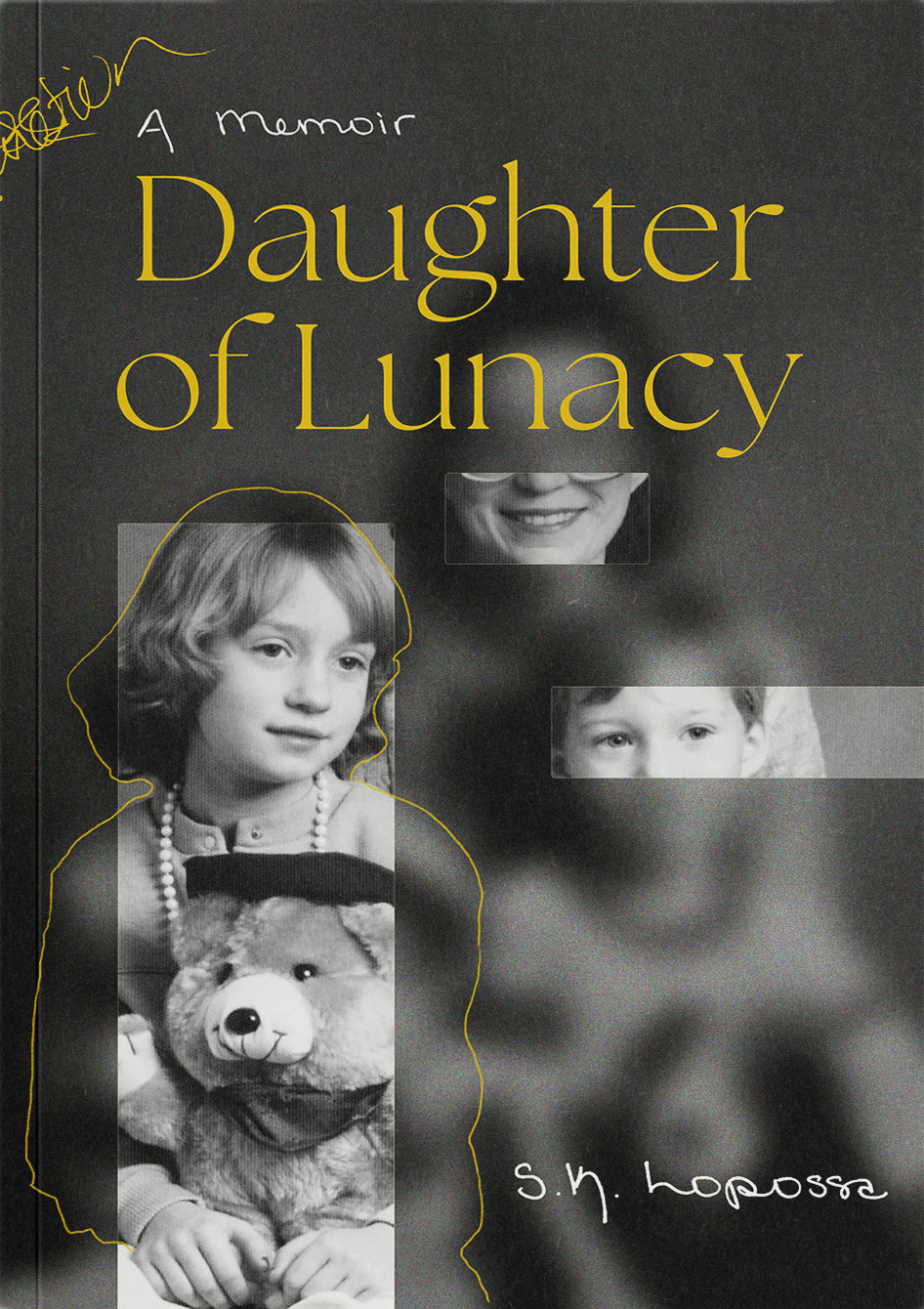
A memoir of growing up in the shadow of a mother's paranoid schizophrenia, and the search for her when she vanished. Written by S.K. Lopossa, memoirist and homelessness and mental health advocate.
"I loved her. I could not save her. And for a long time, I believed that made me a failure at both."
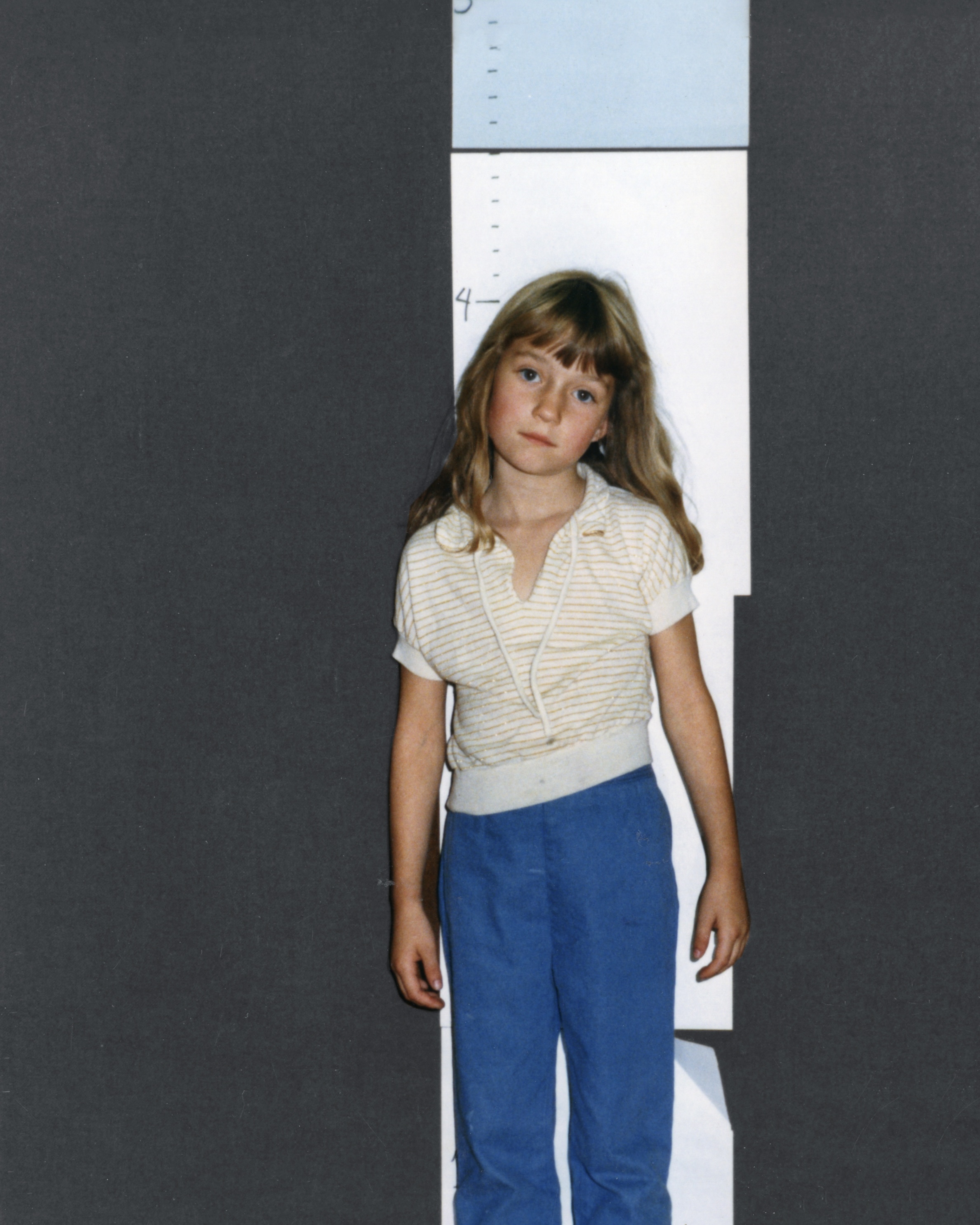
From Daughter of LunacyOctober 11, 1985 — Age 7Photographed at a community event where police documented children for a missing-children database.
S.K. Lopossa— author
The Author
The writer behind the story
Iam a memoirist and a homelessness and mental health advocate based in New York, and I write from inside the experience I advocate for. I am the daughter of a mother who lived with paranoid schizophrenia, a survivor of the chaos that extended well beyond her illness, and a NAMI support group facilitator.
My work begins from one conviction: that the people our systems lose to untreated illness, to the street, to silence were loved by someone, and mattered. I learned that as a daughter long before I understood it as an advocate. My completed memoir, Daughter of Lunacy, is one way I refuse to let that loss go unseen; my initiative, Journey of Lost Soles, which bears witness to those who fall through the same cracks, is another.
I am currently querying literary agents while documenting the journey publicly through my platform, Between Devotion and Survival, sharing what it actually feels like to bring a story this personal into the world. A sequel, Broken Wings and the Iron Rod, is in progress.
"Daughter of Lunacy is my refusal to let her life be in vain. It is also my offering to every child who has tried to survive love wrapped in lunacy, and to anyone who has had to learn that flight was not abandonment but salvation."
The Memoir
Daughter of Lunacy
She was three years old the first time she learned to disappear.
Lying flat in the dead summer grass, her father's arm around her, watching a police officer knock on her grandmother's door, she already knew that survival meant staying silent, staying small, staying invisible.
Daughter of Lunacy is the story of what it costs to love someone you cannot save.
Growing up in the small towns of Washington State, S.K. Lopossa navigated a childhood shaped by her mother's paranoid schizophrenia and her father's volatility, cycling through foster homes, living under assumed names, and learning to read danger in the vacant look in her mother's eyes.
Decades later, the disappearance of her mother forces the past and present to collide. Searching for her means confronting not only what may have happened to her mother, but the childhood that shaped her and the complicated love that endured through it. As she scrolls through photographs of unidentified bodies and struggles to get police to take a missing-person report, she comes face to face with a question that has followed her since childhood: How do you love someone you also have to survive?
Moving between two timelines, Daughter of Lunacy refuses the easy resolution of a triumph narrative. It lingers, honestly, in the space between devotion and survival, honoring a mother who was neither villain nor saint, but a woman deeply loved.
For readers of The Glass Castle, Educated, and What My Bones Know, and for every person who had to learn that flight was not abandonment, but survival.
One confirmation email first, then just one more when the book is available. No newsletters. No marketing.How your details are used: Privacy. Prefer email? contact@sklopossa.com
The Excerpt
Chapter 4: Through Her Eyes
Chapter Four
Bucoda, Washington · 1983, Age 4
At some point during the night, I woke up, dazed, and was confused. Loud voices echoed from the living room, cutting through the silence. I noticed my bedroom curtains were wide open, and the window slid ajar with the moon shining like a spotlight on the empty space where Kenny had fallen asleep on the floor beside me. I felt a surge of fear rush over me. I got up and walked down the hall, following the noise as my heart pounded in my chest. I saw my mom standing by the front door, her hands flailing as she told Officer Dennis a frantic, high-pitched story about Kenny getting kidnapped.
Officer Dennis, Bucoda's police officer, was the one who always showed up to deal with Mom's frequent breakdowns and delusional stories. His relationship with her went back to the years she was still married to my dad when the domestic disputes and her unraveling mental health first began to spill into public view. He had been called out to the house again and again, trying to sort through the chaos of shouting matches, paranoia, and long nights of confusion. After countless calls, his tolerance had worn thin. By the time we were living with Mom again, his visits carried less of a sense of help and more of weary obligation, as though he had already spent years wading through waters that never calmed. "Sit down and shut up!" He yelled. His voice was harsh and unforgiving. Neither of them noticed me. I glanced over at Kenny, who was sitting on the couch, watching them intently and wide-eyed. I went and stood by him, trying to piece together what was happening. "He came through the window!" Mom screamed, describing how she then went outside and circled the house to find Kenny with a Black man who was holding a knife. The story was terrifying, but I had heard enough of my mom's paranoid tales to know they didn't always reflect reality. Still, the fear in Kenny's eyes made it clear that something had happened.
I climbed onto the couch with Kenny, sitting as close as I could. "Did that really happen?" I whispered. Kenny nodded slowly; his body sunken into the couch, half-frozen with fear. I tried to get him to explain, but he couldn't focus long enough. I didn't know how long he had been awake or what he had endured before this point. Kenny just sat and stared wide-eyed at Mom and Officer Dennis as they yelled, Mom's arms waving frantically, while Dennis constantly interrupted, telling her to shut up and calm down. It was clear he wasn't even trying to hear her out.
Then he called Kenny and I to come with him. I felt the urge to grab some of my toys and a blanket but didn't say anything. Officer Dennis reached down and took both of our hands, leading us out into the pitch-black night. My mom was frantic and sobbing. We didn't know where we were going or what would happen. I felt overwhelmed with uncertainty as Kenny and I climbed into the passenger seat of the police car, sharing the space without seat belts. Through the window, I watched my mom as we pulled away, standing in the doorway, swallowed by the porch light, her face streaked with tears, unraveling in the silence we left behind. We sat quietly, staring out into the night, never saying a word. Dennis made a call over the police radio, and I could only understand that we had a destination. We pulled off onto a long dirt road, the headlights illuminating a single brown mobile home with a small wooden porch. No other houses were in sight. The yard was littered with old cars, motorcycles, and odds and ends.
"Here, you can have some of this," Officer Dennis said, setting a half-drunken can of root beer onto the dashboard in front of us. He opened the door, and I panicked. I didn't want him to leave us alone in the car, but I just said, "Okay." I was afraid of the dark and of what might be lurking in the dense surrounding forest. I watched him closely as he made his way to the front door and disappeared inside, the door closing behind him with a final thud.
The mobile home windows glowed with an amber hue, casting eerie shadows that danced on the curtains. I squinted, trying to make out the pictures covering the paneled walls inside. The anticipation of when Dennis would return seemed to be worse than any emotion, I had felt that night, and the pressure of panic slowly rose inside me. The air in the car was stale and growing cooler, adding to my discomfort.
Out of curiosity I lifted the can of root beer and peered inside into the black hole. Disgust and my mom's paranoid warnings of germs ran through my head, and I quickly set it back on the dashboard, feeling like I had already been contaminated. The thirst and hunger began gnawing at me, making the wait feel even more unbearable.
Outside, the distant sounds of night creatures and the rustling of leaves filled the silence. I followed every sound as though locating and identifying it could minimize any lurking threat. The minutes dragged on, each one stretching into what felt like an eternity. My heart pounded in my chest, and my hands felt clammy against the cool vinyl of the seat.
Finally, the door creaked open, and Dennis reappeared. Relief washed over me, and the exhaustion that had been held at bay began to take over. I studied his face as he walked towards the car, noticing a hint of a smile and his body movements less tense. The tension in my own body began to ebb away.
Dennis opened the patrol car door and greeted us warmly as he got in. "Sorry about that, kids. You guys doing, okay?" He asked. His voice was gentle and reassuring. Kenny and I nodded and smiled back somberly. Our earlier fear is still lingering but starting to fade now.
As we drove, the car got warmer, enveloping me in a cocoon of comfort. The rhythmic hum of the engine and the gentle sway of the car lulled me into a state of drowsiness. My eyelids grew heavy, and I fell asleep, Kenny already asleep against my shoulder, the earlier panic slowly dissolving into the warmth and safety of the night.
With only the clothes on our backs, Kenny and I were dropped off at a foster home.
— 42 —
From Daughter of Lunacy · Chapter 4: Through Her Eyes
For Literary Agents
The query packet
Submission materials for Daughter of Lunacy are available to literary agents and publishing professionals by access code or request, including the query letter, synopsis, book proposal, sample pages, and full manuscript.
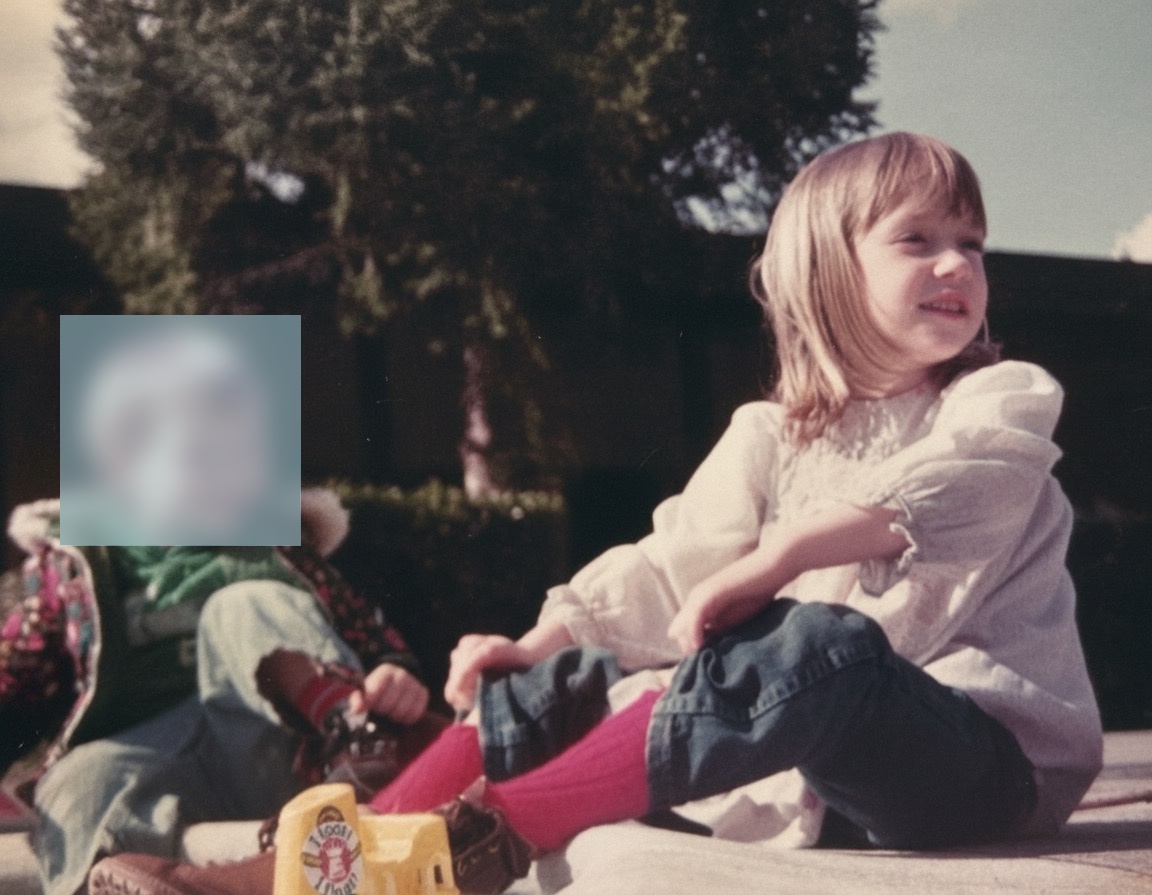
From Daughter of LunacySpring 1984 — Age 5Weekend visit at my dad's apartment with Kenny, during his court-ordered visitation.
Thank you for taking the time to consider this work.
— S.K. Lopossa
🔒
Have an Access Code?
Incorrect code. Please check your query correspondence or request access below.
or
Request Access
Access requests are reviewed personally by the author. Privacy.
Agent Materials
Daughter of Lunacy
A Memoir
Thank you for taking the time to consider Daughter of Lunacy. You'll find all available materials here for download and review.
At three and a half, S.K. Lopossa is hiding in dead summer grass with her father, watching a police officer knock on her grandmother's door. Her father has taken her and her baby brother, Kenny, changed their names, and fled across state lines. When guilt catches up with him over a year later, he contacts their mother — and gets caught. The children are returned to her: a woman whose paranoid schizophrenia is already reshaping every corner of their world.
What follows is a childhood lived in the margins of crisis. Lopossa and Kenny cycle through foster homes, learn to read danger in the vacant look in their mother's eyes, and eventually endure a controlling stepmother and their father's volatility. Through it all, she becomes Kenny's protector — his shadow and his shield — while drawing strength from her grandmother's steady presence, her faith, and a fierce, quiet resourcefulness she builds through necessity.
Decades later, Lopossa has built a stable life in New York City when a phone call shatters it: her mother has gone missing. What begins as concern becomes a two-year search — scrolling through photographs of unidentified bodies on NamUs, filing reports with dismissive officers, and circling the question that has shadowed her since childhood: whether protecting herself from her mother's illness was survival or abandonment.
The memoir braids two timelines — a chronological childhood and a present-day search — converging on Christmas Eve 2019, when two officers arrive at her door with news of her mother. The search ends not in resolution but in the slow, hard work of understanding that she could not have saved her — and that her own flight, first as a child and again as a woman, was never abandonment but salvation.
Daughter of Lunacy does not resolve into triumph. It lingers, honestly, in the space between devotion and survival — honoring a mother who was neither villain nor saint, but a woman deeply loved and impossible to save. It is also an indictment of the systems that failed them both: when the sidewalks feel safer than the care offered by a state institution, the problem is no longer personal — it is systemic.
About the Title
Daughter of Lunacy carries several meanings. Daughter of refers not only to whose child I am, but to what I am a product of. My mother's schizophrenia was part of the lunacy that shaped my childhood, but it was only one part. I grew up amid instability, violence, poverty, fear, family dysfunction, and systems that often failed the people caught inside them. In that sense, I was a daughter of all of it.
The word lunacy comes from luna, the Latin word for moon, rooted in the ancient belief that changes in the moon could cause periods of madness. My mother's mental illness did not change with the moon, but to me as a child, her shifts could feel governed by forces just as mysterious. I could not see what was happening inside her mind or predict which version of my mother I would encounter.
The title holds both realities at once: the chaos that formed me and the mother within it, whose illness could frighten me and whose love could overwhelm me, but who was always more than her illness and the chaos it created.